Quilty: The Stencil Font That Brings Handmade Warmth to Modern Design
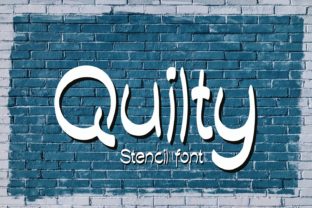
Finding a font that feels genuinely human without sacrificing clarity can be a challenge. Quilty steps into that space as a carefully crafted stencil font, designed without closed loops on its characters. This isn't just a technical detail; it’s the source of its unique personality. The open forms give Quilty a casual, approachable charm, making it feel less like a rigid digital typeface and more like something lovingly cut by hand. It bridges the gap between industrial stencil aesthetics and the warmth of a personal touch.
What makes Quilty stand out in a sea of display fonts is its visual honesty. The absence of closed counters (the enclosed spaces in letters like 'o', 'a', or 'e') creates a distinct, airy feel. This characteristic prevents the letters from looking heavy or blocky, even at larger sizes. Instead, Quilty feels light, breathable, and inherently friendly. It carries a whisper of nostalgia, reminiscent of vintage sewing patterns or hand-painted signage, yet its clean lines keep it firmly planted in modern typography. This balance is its greatest strength—it’s a creative font that feels both timeless and contemporary.
Where Quilty Truly Shines: Real-World Applications
Understanding a font’s personality is one thing; knowing where to deploy it is another. Quilty isn’t your go-to for body text in a lengthy report. Its strength lies in grabbing attention and setting a specific mood. Here’s where this typeface proves its worth:
- Branding and Logo Design: For businesses that want to project approachability, craftsmanship, or a down-to-earth vibe—think artisan bakeries, boutique craft shops, indie publishers, or eco-friendly brands—Quilty can become a cornerstone of their brand identity. Its unique structure makes for memorable logo design that feels authentic.
- Packaging Design: On product labels, especially for handmade goods, specialty foods, or lifestyle products, Quilty adds instant character. It tells a story of care and quality before the customer even reads the description.
- Editorial and Publishing: Use it for chapter titles in a cozy mystery novel, the header of a lifestyle blog, or the masthead of an indie magazine. In editorial design, it draws the eye without overwhelming the page, creating a welcoming entry point for readers.
- Web and Digital Presence: As a headline font on a website, Quilty can break the monotony of standard sans serif font or serif font pairings. It’s particularly effective for portfolio sites, online stores for creatives, or any digital space where personality is key. Just ensure it’s paired with a highly readable font for body copy.
- Social Media and Marketing: In the fast-scrolling world of social media, a distinctive font can stop a thumb. Quilty is perfect for quotes, promotional graphics, event announcements, and Instagram Stories where a casual, engaging tone is needed. It helps create consistent, recognizable social media graphics.
- Personal and Craft Projects: From wedding invitations and party banners to scrapbooking and DIY labels, Quilty is a dream for crafters and hobbyists. Its handwritten font-like quality makes personal projects feel extra special.
Making Quilty Work: Practical Guidance for Your Projects
Choosing the right font is a strategic decision. Here’s how to evaluate if Quilty is the right fit and how to use it effectively.
Evaluating Project Fit
Ask yourself: what is the core feeling I want to evoke? If the answer includes words like warm, friendly, handmade, casual, authentic, or creative, Quilty is a strong candidate. It’s less suited for ultra-corporate, formal, or high-tech contexts where a sleek sans serif font or a classic serif font would be more appropriate.
Mastering Font Pairings
A premium font like Quilty often works best as part of a system. Because it’s a display font, pairing it is crucial for visual hierarchy and readability.
- With Sans Serifs: Pair Quilty with a clean, geometric sans serif (like Montserrat, Poppins, or Avenir) for a balanced, modern look. The simplicity of the sans serif lets Quilty’s character shine without competition.
- With Serifs: For a more traditional or elegant feel, combine it with a transitional serif (like Georgia or Times New Roman). This can create an interesting contrast between old-world formality and Quilty’s casual charm.
- Avoid Pairing with Other Scripts: Mixing it with another script font or handwritten font will likely create visual chaos. Let Quilty be the sole voice of personality in your type hierarchy.
Testing and Readability Considerations
Always test Quilty in context. View it at the actual size it will be used. While its open forms aid legibility for a display font, very small sizes or long paragraphs will strain the reader. Use it for headlines, subheads, pull quotes, and short call-to-action text. Its strength is in short, impactful bursts.
Understanding the Styles and Licensing
Check what’s included with the font family. Does it offer multiple weights (Light, Regular, Bold)? Italic styles? Extended character sets for different languages? Understanding the full package helps you plan for future design needs. For any commercial use—whether for a client, a product you sell, or marketing materials—ensure you have the correct commercial font license. This is a non-negotiable part of using design assets professionally and protects both you and the font creator.
Ultimately, Quilty is more than just a collection of letterforms. It’s a tool for adding a specific, desirable emotion to your work. It doesn’t try to be everything; instead, it excels at creating a feeling of approachable craftsmanship. In a world of perfect digital vectors, its stencil-cut, loopless characters offer a refreshing touch of the handmade, making your designs feel more personal and connected. For designers, marketers, and creators looking to inject warmth and authenticity into their projects, it’s a creative font worth serious consideration.