Goldenrod: Where Medieval Charm Meets Modern Design
Finding a typeface that feels both authentically historical and usable in today's design landscape is a rare find. Too often, fonts inspired by the past sacrifice readability for ornamentation, or they feel like a costume rather than a tool. Goldenrod is a premium font that navigates this challenge beautifully, offering a genuine medieval-inspired serif font with the versatility needed for contemporary projects. It’s not just a decorative relic; it’s a practical design asset for creating brands and materials with depth, story, and a touch of handcrafted warmth.
An Authentic Handcrafted Aesthetic
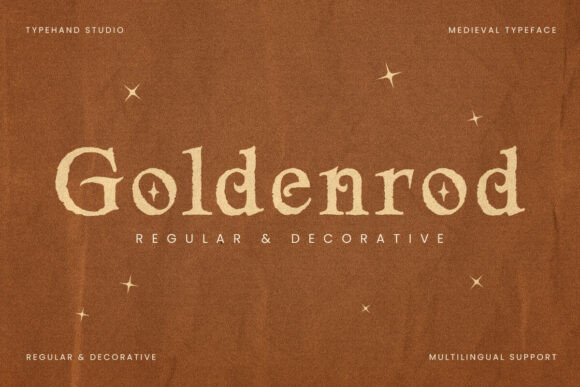
Goldenrod’s visual character is defined by its softly textured edges and elegant, sturdy serif forms. It draws directly from antique lettering and heritage typography, but it avoids looking overly distressed or illegible. The Regular style provides a clean, surprisingly versatile foundation. Its letterforms are clear, with enough historical reference to establish a specific mood without overwhelming a layout. This makes it a strong candidate for body text in editorial design or for longer brand statements where readability is key.
The Decorative style is where the font’s personality truly shines. It incorporates more pronounced details—perhaps subtle flourishes, varied stroke weights, or unique letter connections—that evoke a sense of old-world craftsmanship. This version is built for impact. Think of a headline on a book cover, the name on a boutique wine label, or the masthead of a specialty food magazine. The decorative style doesn’t just display text; it makes a statement, creating an immediate sense of place and history. Together, these two styles give you a cohesive system for building a full brand identity, from logo design to packaging and beyond.
Practical Applications for Storytelling Brands
Where does a creative font like Goldenrod truly excel? Its strength lies in projects where narrative and atmosphere are central to the message. For packaging design, it’s a natural fit. Imagine a small-batch artisan jam, a heritage brewery’s seasonal ale, or a line of botanical skincare. Goldenrod instantly communicates care, tradition, and quality—values that resonate deeply with consumers looking for authenticity. The texture of the letterforms pairs well with natural materials like kraft paper, textured labels, and embossed details.
In editorial design and publishing, Goldenrod can set a powerful tone. It’s ideal for the title and chapter headings of historical fiction, fantasy novels, or poetry collections. For a publisher or author, using a typeface like this builds immediate genre recognition and sets reader expectations. It also works beautifully for specialty magazines or blogs focusing on crafts, history, or gourmet food, where the typography itself becomes part of the content’s allure. When used in social media graphics for these niches, it helps create a consistent, recognizable aesthetic that stands apart from the clean, sans-serif norms of digital feeds.
Making the Right Choice: Pairing and Readability
Choosing any display font requires careful consideration. Goldenrod is a character-rich typeface, so using it for long paragraphs of body copy on a website or in a report would likely hinder readability. Its role is to lead, not to carry the entire narrative. A core practical tip is to pair it with a simple, clean counterpart. A neutral sans serif font or a very understated script font can provide excellent contrast for subheadings or body text. This creates a clear visual hierarchy, where Goldenrod commands attention at the top, and its partner ensures the supporting information is easy to digest.
Before integrating Goldenrod into a major project, test it rigorously. View it at the actual sizes you’ll use—on a product label mockup, in a website header, or on a printed brochure. Check the legibility of tricky letter pairs and ensure the decorative style’s details don’t blur together at smaller scales. Also, review the full character set. Look for ligatures, alternates, and special punctuation that can elevate your designs. Finally, always verify the commercial font license matches your project’s needs, whether it’s for a single client, a product line, or unlimited web use.
Ultimately, Goldenrod is more than just a vintage font. It’s a tool for designers, entrepreneurs, and creators who want to infuse their work with a sense of history, craftsmanship, and storytelling. Used thoughtfully, it doesn’t just decorate a project—it helps build a world, making it a valuable addition to any designer’s toolkit for branding, packaging, and editorial work that aims to feel both timeless and genuinely human.