Badilna: A Serif Font for Modern Branding
When you're building a brand, every visual element tells a story. The colors you choose, the images you select, and especially the typography you use all work together to create an immediate impression. For projects that need to feel both contemporary and refined, finding a font that balances these qualities is key. That's where Badilna enters the conversation. It's a stylish serif font that captures attention with its unique design, blending modern aesthetics with a timeless sense of sophistication.
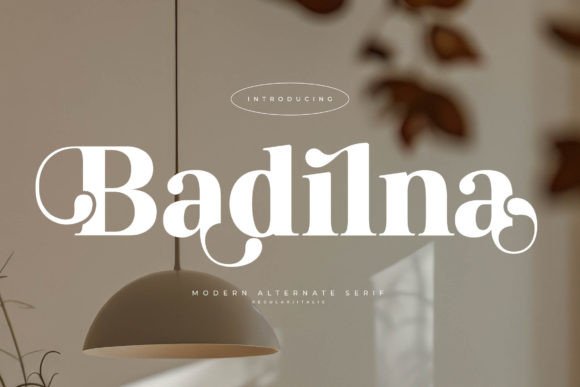
At first glance, Badilna feels familiar yet fresh. Its letterforms carry the classic structure of a serif typeface, providing that sense of reliability and tradition we associate with print and established brands. But look closer, and you'll notice its modern twist. The serifs are distinctive—they're not the heavy, bracketed serifs of old-style fonts, nor are they the hairline serifs of didone designs. Instead, they have a confident, slightly geometric quality that keeps the font feeling current. The overall letter shapes are graceful, with a balanced contrast between thick and thin strokes. This gives Badilna a personality that is elegant without being stuffy, professional without being cold.
Where Does Badilna Shine? Real-World Applications
Understanding a font's personality is one thing; knowing where to apply it is another. Badilna isn't a one-trick pony. Its versatility allows it to adapt to various contexts, making it a valuable asset in a designer's toolkit. Think of it as a premium font that can serve as a primary typeface for entire brand identity systems or as a powerful display font for headlines that need to make a statement.
In editorial design, such as magazines, lookbooks, or annual reports, Badilna excels. Its clear letterforms ensure body text remains readable, while its distinctive style can be scaled up for captivating pull quotes and section headers. For packaging design, especially for boutique products, artisanal goods, or luxury items, the font adds an instant layer of perceived quality. Imagine it on a candle label, a gourmet coffee bag, or a skincare bottle—it communicates care and craftsmanship.
Digital spaces are equally welcoming. For web design, Badilna works beautifully for hero sections, blog post titles, and navigation menus on sites for creative agencies, consultancies, or lifestyle brands. Its legibility on screen is strong, provided you choose an appropriate size and weight. On social media graphics, it can help your posts stand out in a crowded feed, lending a cohesive and polished look to your Instagram quotes, Facebook promotions, or Pinterest pins.
The Practical Impact on Your Projects
Choosing a font like Badilna isn't just about aesthetics; it has tangible effects on how your audience perceives and interacts with your content. Let's break down some of these practical influences.
Readability and Visual Hierarchy: Good design guides the eye. Badilna's clear structure helps establish a strong visual hierarchy. You can use a bold weight for main headings and a regular weight for subheadings, creating an obvious flow for the reader. Its inherent elegance means that even in smaller sizes, it maintains clarity, which is crucial for longer blocks of text in reports or on websites.
Brand Perception and Recognition: Typography is a silent ambassador for your brand. Using a thoughtful serif font like Badilna can position your brand as trustworthy, sophisticated, and detail-oriented. Consistency is vital here. When you use Badilna across your logo, website, business cards, and social media, you build a recognizable visual language. This consistency fosters professionalism and helps your audience remember you.
Audience Engagement: The right font can make content more inviting to read. If your logo design uses Badilna, it sets a tone before a customer even reads your tagline. In marketing materials, its contemporary edge can feel more approachable to a modern audience than a purely traditional serif, potentially increasing engagement with your message.
Making the Right Choice: Practical Guidance
So, how do you decide if Badilna is the right fit for your next project? It starts with evaluation.
First, consider the project's core message. Does it call for a blend of modernity and timeless elegance? If you're designing for a tech startup that wants to appear established and reliable, or a heritage brand aiming to refresh its image, Badilna could be a perfect match. For projects that demand a purely minimalist, ultra-clean look, you might pair it with a sans serif font. For a more dynamic feel, consider pairing it with a subtle script font or handwritten font for accent text.
Always test your font pairing. Badilna pairs well with many sans serifs. Try it with a geometric sans for a clean, modern contrast, or with a humanist sans for a more friendly and organic feel. Don't just look at the letters; test them in context. Set a mock-up of a business card, a website header, or a social media post to see how they interact.
Take time to review the included styles. A robust creative font like Badilna often comes with multiple weights (Light, Regular, Medium, Bold) and perhaps even italics. Understanding these options gives you flexibility within a single typeface family, which is essential for creating nuanced designs and maintaining consistency.
Finally, think about the practicalities of licensing. Badilna is a commercial font, meaning you need to purchase the correct license for your use case—whether it's for a single client project, for your own business's digital and print materials, or for a large-scale commercial product. Always check the license terms to ensure you're compliant, especially if you plan to use it in design assets you sell, like templates or logos.
In the end, selecting a typeface is a strategic decision. Badilna offers a compelling combination of style and function. It’s a modern typography choice that doesn’t sacrifice the classic virtues of a good serif: readability, structure, and a touch of gravitas. By considering your project's needs, testing it thoroughly, and understanding its strengths, you can harness its potential to elevate your work and connect with your audience on a deeper level.