Vernacular Serif: A Font Family for Timeless Branding
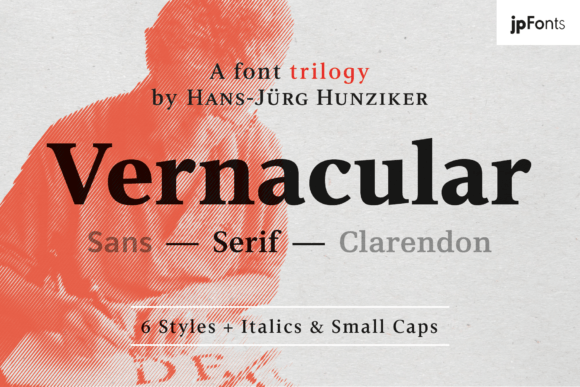
When you’re building a brand, choosing a typeface feels like a high-stakes decision. You need something that balances personality with professionalism. Enter Vernacular Serif. Designed by Swiss typographer Hans-Jürg Hunziker, this isn’t just a single font; it’s a comprehensive design asset rooted in the precision of the "Swiss school." Having spent years working alongside the legendary Adrian Frutiger, Hunziker developed Vernacular with a specific goal: to create a "transitional Linear Antiqua" that bridges the gap between traditional elegance and modern utility.
What makes this premium font family stand out in a crowded market of serif fonts is its noble yet sympathetic expression. It manages to feel warm and approachable without sacrificing the structure required for serious editorial work. For designers, publishers, and business owners, understanding how to leverage the distinct visual rhythm of Vernacular Serif can elevate a project from looking "homemade" to looking "heritage."
The Anatomy of Elegance: Visual Characteristics
At its core, Vernacular Serif is defined by its traditional diagonal axis and horizontal endings. If you look closely at the lowercase letters, you’ll notice the stress runs diagonally—a hallmark of classic typography that adds a sense of movement and flow to the page. This is distinct from its siblings in the Vernacular trilogy: the Sans Serif and Clarendon families, which utilize a vertical axis.
However, Hunziker designed these three distinct styles to work in perfect harmony. They share similar proportions and straight stem structures. This means while Vernacular Serif has that classic, bookish DNA, it doesn’t clash with modern sans-serifs. It bridges the gap. The visual texture is rich and "colorful" (in typographic terms, meaning it has a pleasing gray value on the page), making it incredibly versatile. It isn't a stark, cold modern typography face; it has a heartbeat. The finely tuned italics—often the weak point in lesser font families—are separately drawn and fluid, adding a sophisticated flair to emphasis text.
Real-World Applications: Where Vernacular Shines
Knowing the technical specs is one thing, but applying them to brand identity is where the real work happens. Because of its "sympathetic" nature, Vernacular Serif excels in environments where you need to build trust and authority while remaining relatable.
Publishing and Editorial Design
This is the font’s home turf. With 12 font weights to choose from, you have the entire spectrum of hierarchy at your fingertips. For editorial design, use the lighter weights for body copy—they are highly readable at small sizes—and reserve the heavy weights for impactful headlines. Whether you are typesetting a coffee table book, a quarterly magazine, or a dense annual report, the clarity of Vernacular Serif ensures that long-form reading remains a pleasure, not a chore.
Branding and Corporate Identity
For entrepreneurs and small business owners, logo design is often the first hurdle. A logo using Vernacular Serif immediately communicates stability and intelligence. It is particularly effective for brands in the lifestyle, publishing, education, or artisanal food sectors. Because the font family is so extensive, you can use the Serif for your primary branding and pair it with the Vernacular Sans or Clarendon for secondary information, ensuring total consistency across your brand identity without ever leaving the type family.
Digital and Web Design
In the realm of web design, readability is king. The horizontal endings and open counters of Vernacular Serif render beautifully on high-resolution screens. It avoids the "fuzziness" that some serifs suffer from on digital displays. It is an excellent choice for blog headers, hero text, and pull quotes. When paired with a clean sans-serif for UI elements, it adds a layer of sophistication to a website that generic system fonts simply cannot achieve.
Strategic Value: Influence on Perception and Engagement
Fonts are silent ambassadors. The choice to use Vernacular Serif influences how your audience perceives your message before they even read the words. Because of its Swiss heritage and the pedigree of its designer, this typeface carries an inherent sense of competence.
When used in marketing materials, such as brochures or social media graphics, it helps establish a visual hierarchy that guides the reader's eye. The "bouquet" of weights allows you to create stark contrast between a headline and a subhead, which is crucial for skimming behavior on social platforms. Furthermore, using a commercial font like this signals that you take your business seriously. It moves your brand away from the "startup" aesthetic of free fonts and into the realm of established, professional entities.
Practical Guidance: Implementation and Pairing
Integrating a complex system like the Vernacular trilogy requires a strategy. Here is how to get the most out of this asset:
- Evaluate the Fit: Ask yourself if your brand voice is "authoritative but warm." If you are a tech startup looking for extreme minimalism, the Serif might feel too traditional. If you are a consultant or a creative agency, it is likely a perfect fit.
- Master the Font Pairing: The most effective pairing is often within the family itself. Try using Vernacular Serif for headlines and Vernacular Sans for body text. The shared geometry creates a seamless look. Alternatively, pair it with a neutral geometric sans-serif for a more distinct contrast.
- Check the Licensing: As a premium font, ensure you have the correct license for your specific use case. Desktop licenses cover print and logos, while web fonts require a specific license for CSS implementation. If you are using it for packaging design, verify the terms for that specific medium.
- Test the Weights: Don't just settle for Regular and Bold. Explore the full 12-weight range. Sometimes, a "Book" or "Light" weight can offer a more elegant feel for body text than a standard Regular weight, depending on the paper stock or screen background.
Ultimately, Vernacular Serif is more than just a creative font; it is a tool for visual storytelling. By leveraging its rich history and robust design, you can create work that feels both timeless and distinctly contemporary. Whether for packaging design, web design, or high-end social media graphics