Gashroad: A Handcrafted Vintage Font for Bold Branding
There’s a certain honesty in things that look a little worn. A well-used leather tool belt, a faded roadside sign, a book with cracked spine—these objects tell a story. In design, achieving that kind of authentic, textured character often requires a font that carries its own history. Gashroad is precisely that: a handcrafted vintage font that doesn’t just mimic age, but embodies it. It’s built for designers and creators who want to inject a raw, tangible feel into their work without relying on digital filters or overused effects.
The Anatomy of a Typeface with a Past
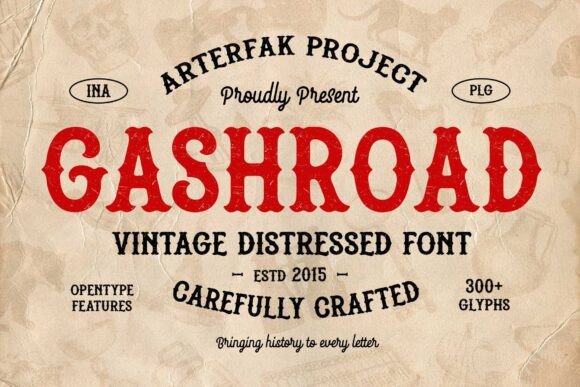
At its core, Gashroad is a serif font, but calling it that undersells its personality. Its design draws directly from Western-style typography and the rugged lettering found on vintage print labels and old signage. The defining features are its strong serifs and strokes—letters that feel substantial and grounded. What truly sets it apart, however, is the integrated grunge effect. This isn't a separate texture layer you apply later; the imperfections, slight ink bleeds, and weathered edges are part of the font’s DNA. Each character feels hand-printed, giving any headline or logo an immediate sense of craftsmanship and time.
The font’s duality is its strength. It’s old and new simultaneously. While rooted in a bygone era, the design is clean and deliberate enough for contemporary use. This balance is expanded through a set of beautiful alternate characters. These stylistic swaps allow you to change the look of a word or phrase with a simple click, ensuring your logo design or social media graphic has a unique flair that stands out. It’s a premium font that offers creative control, not just a static set of letters.
Where This Creative Font Truly Shines
Understanding a font’s ideal environment is key to using it effectively. Gashroad thrives in projects where you want to communicate authenticity, ruggedness, or a nod to tradition. Think about applications where a clean, modern sans serif font might feel too sterile or a flowing script font too delicate.
For brand identity, it’s a powerhouse. A craft brewery, a barbershop, an artisanal food brand, or an outdoor apparel company can use Gashroad as their primary display font to instantly establish a visual personality. It tells customers there’s substance and heritage behind the product. In packaging design, it makes labels for hot sauces, coffee, or spirits look like they’ve been pulled from a vintage pantry.
Its applications are broad across editorial design and print. Use it for chapter titles in a book about Americana, for a magazine headline covering classic cars, or for the masthead of a woodworking journal. In advertising and flyers, a headline set in Gashroad grabs attention with character, making it ideal for promoting events like county fairs, live music nights, or vintage markets. Even in the digital space, it translates beautifully to web design for hero section titles or promotional banners where you need to make a strong first impression.
Practical Guidance for Choosing and Using Gashroad
Adopting any new design asset requires a thoughtful process. Here’s how to evaluate if Gashroad is the right creative font for your project.
Evaluate Project Fit First: Before falling in love with its look, ask if its personality aligns with your message. A law firm’s annual report might not be the best fit, but a retro-themed wedding invitation could be perfect. Its visual style should amplify your content, not clash with it.
Test for Readability in Context: As a display font, Gashroad is optimized for impact, not body text. Use it for headlines, logos, and short, punchy statements. Always test it at the size and in the medium you intend to use. A word that looks striking on a poster might become difficult to read as a small subhead on a website. The grunge texture, while adding charm, can reduce clarity at very small sizes.
Master the Art of Font Pairing: This is where Gashroad truly excels. Its strong character needs a complementary partner. For a balanced design, pair it with a clean, neutral sans serif font for body copy or supporting text. A font like Helvetica, Open Sans, or even a simple geometric sans can provide a modern counterpoint, allowing the vintage display font to command attention without overwhelming the viewer. Avoid pairing it with other highly decorative or textured fonts, as this will create visual chaos.
Explore the Included Styles and Alternates: Don’t just use the default letters. Dive into the alternate characters. Swapping out a standard ‘A’ or ‘G’ for an alternate version can transform a logo from good to unforgettable. This feature is what elevates it from a simple typeface to a versatile design asset for logo design and custom wordmarks.
Understand the Licensing: Since Gashroad is a commercial font, ensure you purchase the correct license for your use. If you’re a small business owner creating your own branding, a desktop license is typically sufficient. If you’re a designer creating a logo for a client, you’ll need to verify the license allows for that kind of distribution. Most foundries are clear about this, but it’s always worth a quick check to avoid issues down the line.
Ultimately, Gashroad is more than just a vintage font; it’s a tool for storytelling. It brings a sense of place, time, and authenticity that is hard to manufacture digitally. For designers, entrepreneurs, and creators looking to build a visual language that feels genuine and memorable, it’s a typeface that delivers real-world value, one beautifully weathered letter at a time.