Sketch Bouquet: A Chalk Slab Serif Font with Floral Charm
Understanding the Essence of Sketch Bouquet
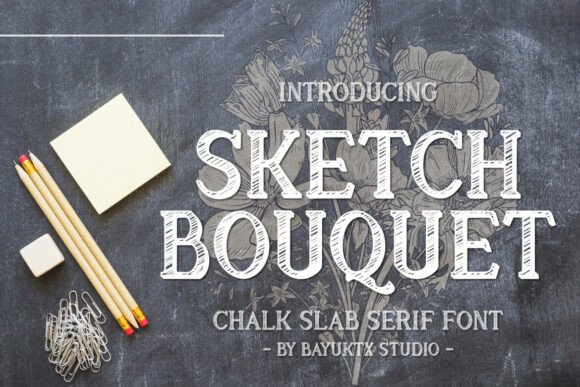
When you first encounter Sketch Bouquet, you immediately sense its dual nature. It’s a slab serif font at its core, giving it a sturdy, reliable foundation with those classic thick terminal strokes. Yet, it’s also a hand-drawn typeface, where every letter carries the subtle, imperfect texture of a chalk stroke on a board. This combination is powerful. You get the bold presence and readability of a serif font paired with the warmth and personality of a handwritten font. It’s not trying to be a perfect digital reproduction; it’s celebrating the slight roughness, the organic flow, and the tactile feel of real materials.
The visual personality of Sketch Bouquet a Chalk Slab Serif Font is one of nostalgic charm and artistic sincerity. Imagine the menu at a favorite local café, the signage for a weekend farmers' market, or the title on a handmade greeting card. That’s the world this typeface inhabits. The chalk texture isn’t overly distressed; it’s refined, suggesting a skilled hand at work. The floral mood isn’t literal flowers embedded in the letters, but rather an overall aesthetic that feels natural, expressive, and delicately crafted. For designers, this means it brings an instant layer of authenticity to a project, moving it away from sterile, corporate uniformity and towards something more human and engaging.
Where This Creative Font Truly Shines
The practical applications for Sketch Bouquet are extensive, particularly for projects where you want to convey approachability and craftsmanship. In branding, it’s a standout choice for businesses that want to emphasize a handcrafted or artisanal identity. Think of a small-batch jam company, a boutique florist, a local pottery studio, or a family-run bakery. Using this font in their logo design or primary headlines instantly tells a story of care and personal touch. It works beautifully for cafe menus, restaurant menus, and packaging design, where it can make product descriptions feel more personal and inviting.
Beyond traditional print, its utility extends seamlessly into the digital realm. For social media graphics, especially on platforms like Instagram and Pinterest, Sketch Bouquet can make quotes, announcements, and promotional posts pop with a unique, artisanal flair that cuts through the noise of generic content. It’s a fantastic asset for blog headers, particularly for niches like DIY crafts, gardening, vintage fashion, or home cooking. In editorial design, it can be used for feature titles in magazines or e-books that focus on lifestyle, hobbies, or creative arts, adding a thematic touch that complements the photography and copy.
It’s also exceptionally suited for personal and event-based projects. Wedding invitations, save-the-date cards, and event signage can achieve a romantic, bespoke quality. Crafters and hobbyists will find it invaluable for creating labels, tags, and custom artwork. The key is recognizing its strength as a display font. While highly readable for headlines and short bursts of text, its textured nature means it’s not designed for long-form body copy. Its role is to attract attention, set a mood, and anchor the visual hierarchy of a design.
Integrating Sketch Bouquet into Your Design Workflow
Choosing a font like Sketch Bouquet is just the first step. Using it effectively requires a bit of strategy. Start by evaluating your project’s core message. If you’re aiming for modern, sleek minimalism, this might not be the right fit. But if your brand or project values warmth, creativity, and a touch of nostalgia, it’s a perfect candidate. Always test it in context. Mock up a business card, a website hero section, or a social media post to see how its character interacts with your color palette, imagery, and other design elements.
A critical consideration is font pairing. Because Sketch Bouquet has such a strong personality, it benefits from a cleaner, more neutral companion. Pair it with a simple, clean sans serif font for body text to ensure maximum readability and visual balance. For example, a geometric sans serif can provide a contemporary counterpoint, while a more traditional sans serif can maintain a classic feel. Avoid pairing it with other highly decorative or script fonts, as this can create visual clutter. The goal is to let Sketch Bouquet be the star of the headlines while supporting text remains effortless to read.
Before committing to any premium font, review the full character set and licensing. Check that the commercial font license aligns with your intended use, whether for a client project, merchandise, or digital products. Explore the included styles—does it have bold or italic versions? Are there stylistic alternates or ligatures that can add extra flair? Test the font at the sizes you’ll actually use. A letter that looks charming in a large headline might lose its texture or become illegible when scaled down. For web design, ensure the font file is optimized for fast loading and renders well across different browsers and devices.
Ultimately, Sketch Bouquet is more than just a collection of glyphs; it’s a design asset that injects a specific mood. Its power lies in its ability to make a brand feel more accessible, a menu more inviting, and a social media post more relatable. By understanding its strengths and applying it thoughtfully, you can leverage this creative font to build a stronger, more cohesive brand identity that resonates on a human level. It’s a tool for telling stories that feel genuine, expressive, and wonderfully timeless.